
Introduction
A real safety culture is not created through policies alone. It develops when safety becomes part of everyday decisions, conversations, and expectations across the job site.
On construction and trades sites, where crews, conditions, and hazards change constantly, safety depends on leaders setting clear systems, planning work properly, showing up, responding to concerns, involving workers directly, and consistently reinforcing safe behaviour over time.
It means everyone, from leadership to frontline workers, is committed to safe practices, open communication, and continuous improvement to reduce incidents and injuries.
A strong safety culture becomes visible in how crews communicate, how quickly issues are addressed, and how comfortable workers feel stopping or questioning work when something seems unsafe.
When leaders do this well, organizations typically see fewer injuries, stronger morale and engagement, more consistent productivity, and lower costs tied to delays, rework, and claims. Ultimately, safety culture reflects the daily environment leaders create.
On construction and trades sites, where crews, conditions, and hazards change constantly, safety depends on leaders setting clear systems, planning work properly, showing up, responding to concerns, involving workers directly, and consistently reinforcing safe behaviour over time.
It means everyone, from leadership to frontline workers, is committed to safe practices, open communication, and continuous improvement to reduce incidents and injuries.
A strong safety culture becomes visible in how crews communicate, how quickly issues are addressed, and how comfortable workers feel stopping or questioning work when something seems unsafe.
When leaders do this well, organizations typically see fewer injuries, stronger morale and engagement, more consistent productivity, and lower costs tied to delays, rework, and claims. Ultimately, safety culture reflects the daily environment leaders create.
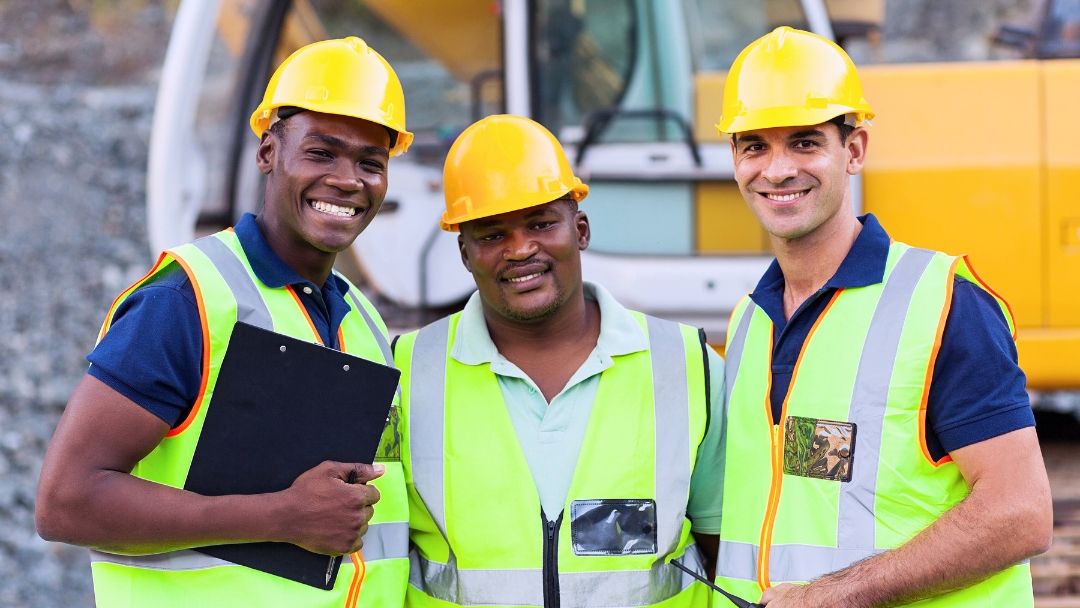
What Leaders Put in Place to Build Culture
In high-risk work like construction and the trades, strong safety cultures tend to share common leadership foundations. These are visible not just in written policies, but in the operational decisions leaders make before and throughout the job.
On most construction projects, multiple contractors and trades operate on the same site, often with different employers, procedures, and safety standards. Strong leaders establish shared site expectations, coordinate sequencing between trades, and ensure communication flows across companies so responsibilities are clear.
When coordination is weak, gaps in responsibility, communication, or supervision can quickly increase risk even when individual crews follow their own procedures.
These foundations typically show up through a set of consistent leadership practices across the site:
On most construction projects, multiple contractors and trades operate on the same site, often with different employers, procedures, and safety standards. Strong leaders establish shared site expectations, coordinate sequencing between trades, and ensure communication flows across companies so responsibilities are clear.
When coordination is weak, gaps in responsibility, communication, or supervision can quickly increase risk even when individual crews follow their own procedures.
These foundations typically show up through a set of consistent leadership practices across the site:
1. Leadership Commitment
Leadership commitment shows up in real operational decisions: scheduling enough time to do tasks safely, staffing appropriately, funding proper PPE, and refusing to cut corners even when deadlines are tight.
When workers repeatedly see leaders backing safety in real conflicts, like delaying a pour or shutting down a lift, they begin to understand that safety truly is non-negotiable.
When workers repeatedly see leaders backing safety in real conflicts, like delaying a pour or shutting down a lift, they begin to understand that safety truly is non-negotiable.
2. Early Hazard Identification and Planning
Strong safety leadership also includes identifying hazards before work begins. This means reviewing site conditions, conducting pre-job and pre-task hazard assessments, and planning controls before crews start work.

When risks are identified early rather than discovered during execution, teams can adjust methods, equipment, and sequencing ahead of time, reducing last-minute pressure and preventing avoidable incidents.
3. Open Communication
Open communication means workers can raise hazards, mistakes, fatigue concerns, equipment issues, and near misses without fear of being shut down or punished.
Leaders support this by asking questions during walk-arounds, listening seriously to concerns, and closing the loop by explaining what changed as a result. When communication leads to visible action, reporting becomes a standard part of how work is done.
Leaders support this by asking questions during walk-arounds, listening seriously to concerns, and closing the loop by explaining what changed as a result. When communication leads to visible action, reporting becomes a standard part of how work is done.
4. Worker Participation
Worker participation starts at the leadership level by involving experienced foremen, journeypersons, and crews in planning, procedures, and problem solving. Strong leaders build culture when they bring field experience into pre-task planning, control selection, and safety committees that genuinely influence how work gets done.
5. Just and Fair Accountability
A strong safety culture balances accountability with fairness. Honest mistakes and system failures are handled differently from reckless behaviour or deliberate violations. When workers see that reporting an error leads to fixes and learning rather than automatic discipline, they are far more likely to raise issues early, which strengthens the culture over time.

6. Continuous Learning
Strong leaders treat incidents and near misses as operational information, not just statistics. They review what happened, share lessons in toolbox talks, update procedures, and make adjustments, so the same pattern is less likely to repeat on the next project.
How Leaders Turn Crews Into Active Safety Partners
Leadership establishes the structure, but culture strengthens through how crews are involved in daily safety practices. Trades leaders build safety culture by actively engaging workers in identifying risk, shaping solutions, and reinforcing safe behaviour in real time.
1. Inclusive Safety Committees
Effective leaders establish safety committees that include representatives from all levels of the workforce such as frontline workers, foremen, and subcontractors and give them meaningful responsibilities such as reviewing incidents, checking procedures against field conditions, and recommending improvements.
When suggestions from these groups lead to visible changes, like improved access routes, better tools, or adjusted sequencing, crews see that engagement matters.
When suggestions from these groups lead to visible changes, like improved access routes, better tools, or adjusted sequencing, crews see that engagement matters.
2. Practical and Interactive Training
Leaders make training practical and task-focused. Toolbox talks linked to current work, demonstrations using the actual equipment on site, and short scenario discussions about recent incidents or near misses help workers recognize hazards in their own environment. This kind of field-focused training makes safety more relevant and easier to apply.
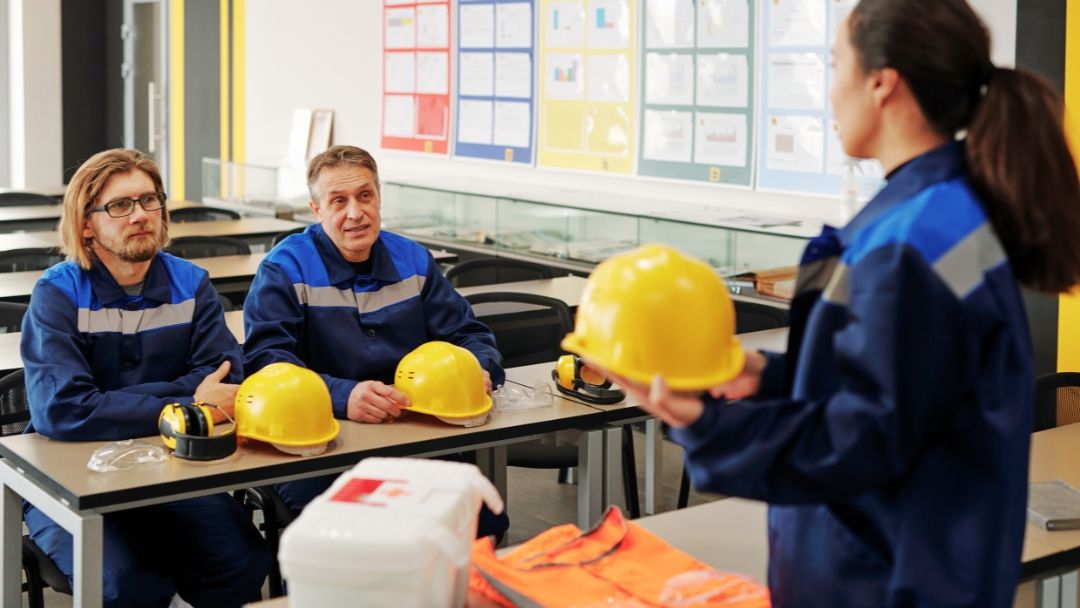
3. Normalize Speaking Up
On strong job sites, leaders actively invite input by asking questions such as “What could hurt us here?” or “What’s different today?” during pre-task meetings. When someone raises a concern and leaders take the time to address it and acknowledge the input in front of the crew, it reinforces that speaking up is expected, not inconvenient.
4. Practicing Emergency Response and Rescue Procedures
Regular emergency response practice helps crews understand exactly what to do when something goes wrong and allows teams to test procedures in real site conditions. These walkthroughs and drills keep responses fresh, reveal gaps early, and give workers confidence that plans will actually work when needed.
Putting the Foundations into Practice
Safety culture is built through the combination of clear leadership decisions and active crew involvement. When leaders set realistic plans, communicate openly, involve workers in solving problems, and reinforce learning from daily work, safety stops being something solely managed on paper and becomes part of how the job actually runs.
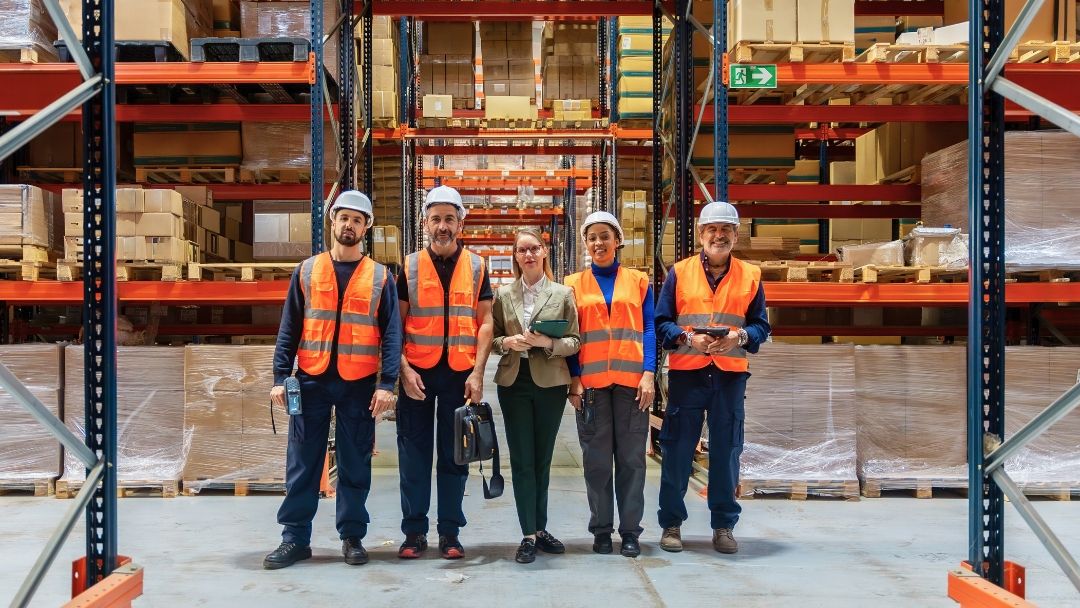
On complex construction sites where conditions change constantly and multiple trades work side by side, these foundations help crews understand expectations, coordinate safely, and make better decisions in the moment.
Strong leadership does not eliminate risk, but it creates the environment where risks are recognized early, concerns are raised quickly, and safe work becomes the normal way the site operates.
Next Step
Building the foundation is only the first step. Strong safety cultures are sustained through daily leadership behaviour, learning from close calls, and reinforcing the right actions over time.
Sources
1. Construction Management Association of America. "Safety Culture — Improving Construction Profitability." CMAA, www.cmaanet.org/sites/default/files/resource/Safety-Culture-Improving-Construction-Profitability.pdf. Accessed 6 Jan. 2026.
2. Construction Management Association of America. "Understanding Safety Culture in the Construction Industry." CMAA, www.cmaanet.org/sites/default/files/resource/Safety%20Culture.pdf. Accessed 5 Jan. 2026.
3. Construction Safety Council. "Building A Strong Foundation: Understanding Safety Culture in Construction." Construction Safety Council, 18 Oct. 2023, www.buildsafe.org/Blog/ArtMID/1013/ArticleID/184/Building-A-Strong-Foundation-Understanding-Safety-Culture-in-Construction. Accessed 5 Jan. 2026.
4. HSE Network. "Safety Leadership in Construction: HSE Management Tips for Managers." HSE Network, 12 Dec. 2023, www.hse-network.com/safety-leadership-in-construction-hse-management-tips-for-managers. Accessed 6 Jan. 2026.
5. National Association of Safety Professionals. "How to Create a Safety Culture in the Construction Industry." NASP, 23 Dec. 2024, www.naspweb.com/blog/how-to-create-a-safety-culture-in-the-construction-industry. Accessed 5 Jan. 2026.
6. Procore. "Construction Safety Culture: Creating a Safe Workplace." Procore, 20 Mar. 2025, www.procore.com/library/construction-safety-culture. Accessed 6 Jan. 2026.
7. WorkSafeBC. "Building a Strong Safety Culture, One Simple Message at a Time." WorkSafeBC, 4 Sept. 2023, www.worksafebc.com/about-us/news-events/campaigns/2023/September/building-strong-safety-culture. Accessed 6 Jan. 2026.